CLI
Explore from your terminal
Browse talks, speakers, agendas, and engineering tools. Use JSON output in your own scripts.
Looking for our meetups? San Francisco events.
$ agenteng events --previous
Our last event filled AWS Builder Loft in San Francisco to capacity.
// our definition
Agent Engineering is the discipline of designing, building, evaluating, and operating AI agents. It covers prompt, context, harness, inference, memory, evaluation, and code.
Agent Engineering HQ brings that discipline together in conferences and meetups. Our first conference, Agent Engineering London 2026, was fully booked, with nine technical talks on a single track. The next conference is Agent Engineering San Francisco, coming April 2027, and between conferences we run technical meetups in San Francisco and London.
It is for people who ship agent systems: engineers, researchers, and technical leads who work on the stack behind the model.
Open-source agent tooling
AgentEng isn't just a conference. It's open-source agent infrastructure and tooling for agent engineering.
Come for the events, stay to tinker. Play with MCP, CLI, A2A, and ACP agents, learn the infrastructure, and do real agent engineering. We're building AgentEng alongside the events, so you can build along with us.
agenteng tools --discipline memoryExplore the memory tool directory. Try other disciplines such as eval, harness, and inference.
CLI setup and examplesBrowse talks, speakers, agendas, and engineering tools. Use JSON output in your own scripts.
Give your agent access to conference context and the tool directory through local or remote MCP.
Discover the AgentEng agent and query it through A2A. Reuse the same request contract over HTTP.
Launch a coding agent with talk or tool context attached, and ask it to build something in your workspace.
Learn the tools. Tinker with the infrastructure. Build something real.
AI system engineering keeps specializing. In practice, these disciplines converge in one place: Agent Engineering.
discipline::01
Prompt Engineering
discipline::02
Context Engineering
discipline::03
Harness Engineering
discipline::04
Eval Engineering
discipline::05
Memory Engineering
discipline::06
Inference Engineering
discipline::07
Loop Engineering
discipline::08
Agentic Engineering
discipline::09
Code Engineering
discipline::10
Protocol Engineering
discipline::11
Graph Engineering
discipline::12
Search Engineering
discipline::13
Factory Engineering
discipline::14
Decision Engineering
discipline::∞
Prompts, context, harnesses, evals, memory, inference, loops, protocols, graphs, search, and code converge in systems engineering.
Prompt Engineering
Context Engineering
Harness Engineering
Eval Engineering
Memory Engineering
Inference Engineering
Loop Engineering
Agentic Engineering
Code Engineering
Protocol Engineering
Graph Engineering
Search Engineering
Factory Engineering
Decision Engineering
discipline::∞
... *.Engineering
Agent Engineering
Agentic systems require more than prompts alone. They depend on prompts, context, harnesses, evals, memory, inference, loops, protocols, graphs, search, and code working together as one engineering discipline.
Agent Engineering HQ runs San Francisco. London events run with London Agentic AI. Both hold the same standard of technical depth.
Home base of Agent Engineering HQ. Practitioner forums on harness engineering, memory engineering, inference engineering, and more.
Events with London Agentic AI, the UK's biggest Agentic AI community, including the AgentEng London Conference 2026.
$ agenteng events --sf
Join a meetup in San Francisco or London, or help with the next edition if it suits you.
Next up in San Francisco: Code Engineering: From Coding Agents to Software Factories, 27 October 2026, 6:00 PM. Follow the calendars to hear about the next one.
Support is optional and comes with no obligation. Help with food, drinks or recording if it suits you.
Partner with usAgents are not features. They are long-running systems with their own development lifecycle, and they need their own engineering discipline.
Agentic systems behave differently from traditional software. A response can look successful and still fail the task. Behaviour drifts. Trajectories matter as much as outputs. These properties demand a dedicated Agent Development Lifecycle (ADLC), distinct from the traditional software development lifecycle.
The ADLC covers building, testing, deploying, and monitoring agents in production, with iteration and governance running as continuous layers throughout. Production signals feed back into evaluation. Traces drive improvement. Governance keeps the system trustworthy.
Agent Engineering is the practice of designing, building, evaluating, and operating AI agents across that lifecycle. It applies to every category of agent, from coding and research agents to customer-facing, domain-specific, and autonomous multi-agent systems.
AgentEng exists to define and advance this discipline. We bring together the practitioners building the tools, frameworks, and supporting infrastructure that make every phase of the ADLC work in production.
Agent systems do not behave deterministically, so reliability has to be engineered around variance in output rather than assumed from the code path.
Agent behaviour follows the specification it is given. Precise task definitions and planning up front produce more predictable results at runtime.
Users can submit any input, so conventional test coverage does not hold. Behaviour is better understood through evaluation against production traffic.
Compute, budget and human review are finite resources, and allocating them across agent runs is a core operational concern at scale.
Engineering work shifts from writing code towards designing the reviewers that check it, using validation loops and automated pull request gates.
Agents working together need defined communication patterns, with parallel and sequential workflows arranged to avoid conflicting or duplicated work.
The engineering disciplines that form the backbone of production-grade Agentic AI.
Writing effective prompts, system instructions, and prompt patterns. Covers structured outputs, few-shot design, prompt optimization, and LLM-native communication.
Shaping what an agent sees at runtime. Covers context construction, compression, grounding, retrieval, and MCP (Model Context Protocol).
Defines the execution environment around an agent. Wires models to tools, policies, sandboxes, and execution constraints.
Measuring agent behavior in non-deterministic systems. Covers evaluation frameworks, behavioral testing, LLM-as-judge, and reliability benchmarks.
How agents store, retrieve, and evolve state over time. Covers short-term vs long-term memory, retrieval strategies, and personalization.
Serving models efficiently in production. Covers GPU/hardware selection, inference engines (vLLM, SGLang, TensorRT-LLM), latency budgeting, batching, and cost optimization.
Designing the agent's run loop: the iterate, observe, and act cycle. Covers control flow, stopping conditions, retries, self-correction, and long-running autonomous loops.
Automating the entire software development lifecycle and engineering with AI agents.
Improving the coding capabilities of models and agents. Covers agentic coding, coding agents, code generation quality, and AI-assisted software development.
Standing up the protocol layer agents talk over. Covers MCP, ACP, A2A, A2UI, transport and auth choices, versioning, and cross-vendor interoperability.
Building agents with graphs. Covers graph databases, knowledge graphs, graph retrieval, and modelling agent state and execution as graphs.
Agentic search techniques and the retrieval layer underneath them. Covers query planning, ranking, hybrid search, and improving agent behaviour through better search.
Designing and building software factories, where agents take work from spec to shipped code. Covers pipelines, review gates, orchestration of many agents, and keeping the output maintainable.
Engineering the systems that make decisions. Covers decision models, decision-system design, planning under uncertainty, and how agents choose and justify an action.
Watch our agent swarm coordinate in real-time to create the most technically rigorous Agentic AI conference.
Orchestrator
Venue
Speakers
Sponsors
Audience
Content
Active
Builder Network
6
Core Disciplines
Invite Only
By invitation
London
Then San Francisco
Production patterns, failure analysis, and scaling strategies, presented by the engineers who build these systems.
From frameworks and infrastructure to models, tools, and platforms.
Agent Engineering surfaced independently across practitioner communities, platforms, and research.
AgentEng brings these conversations together, focused on practice over promotion.
// organisers
Built on community, shaped with practitioners, speakers, and collaborators.
Superagentic AI
Advancing the Agent Engineering discipline and practice
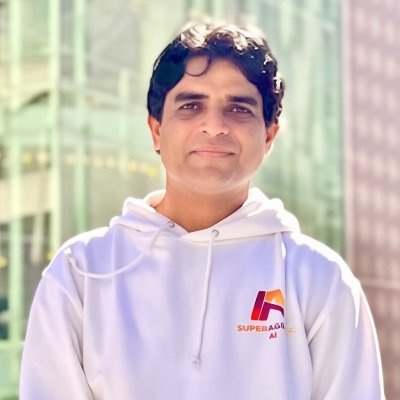
Conference Chair & Curator · Ex-Apple Engineer (6 years) · Organizer, London Agentic AI & Agent Engineering HQ